
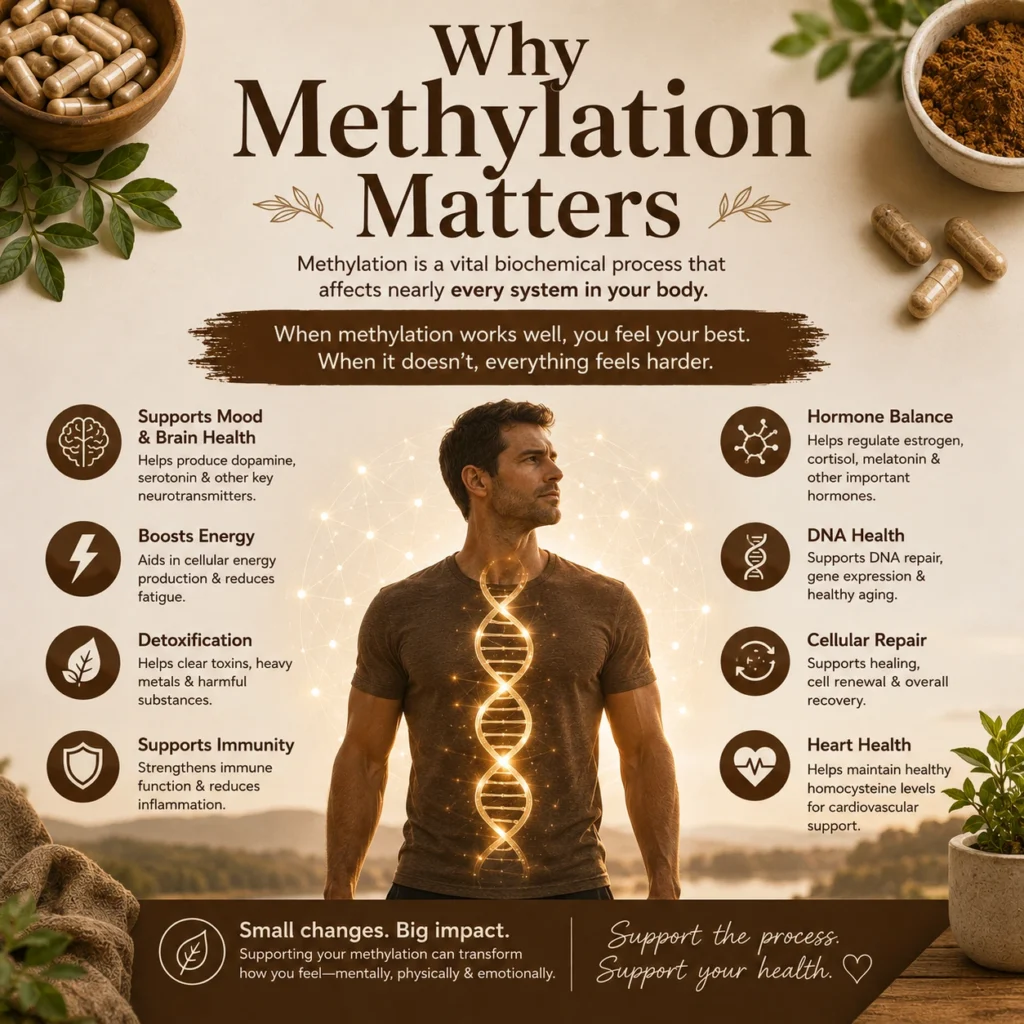
Methylation is one of the most important processes happening in your body every second of the day — yet most people have never heard of it. Think of methylation as your body’s internal “support system” that helps regulate energy, detoxification, hormones, mood, immunity, brain function, and cellular repair.
When methylation is working well, the body can adapt, heal, and function efficiently. When it becomes sluggish or impaired, a wide range of symptoms and chronic health issues can begin to appear.
What Does Methylation Do
Methylation helps your body:
- Produce important brain chemicals like dopamine and serotonin
- Support energy production inside your cells
- Detoxify toxins, chemicals, and heavy metals
- Regulate hormones such as estrogen
- Support healthy sleep through melatonin production
- Repair DNA and support healthy aging
- Control inflammation and immune function
- Protect the cardiovascular and nervous systems
In simple terms, methylation helps your body stay balanced, resilient, and adaptable.
Signs Your Methylation May Be Struggling
When methylation pathways are under stress, people may experience symptoms such as:
- Chronic fatigue
- Brain fog
- Anxiety or low mood
- Hormonal imbalances
- Sleep issues
- Poor detoxification
- Inflammation
- Allergies or histamine reactions
- Difficulty recovering from stress
- Chronic health conditions
Many people continue searching for answers because these symptoms can appear in different systems of the body at the same time.
The MTHFR Connection
You may have heard of the MTHFR gene. This gene plays an important role in methylation. Certain genetic variations can reduce the body’s ability to methylate efficiently.
This does not mean something is “wrong” with you — it simply means your body may require more support in areas like nutrition, detoxification, stress management, and lifestyle balance.
When methylation becomes impaired, it can affect:
- Mood and neurotransmitter production
- Cellular energy and mitochondrial function
- Detoxification capacity
- Hormone regulation
- Immune health
- Healing and recovery
Why a Personalized Approach Matters
No two people are the same. Two individuals may have similar symptoms but completely different underlying stressors affecting methylation.
Factors such as:
- Diet
- Stress
- Environmental toxins
- Gut health
- Trauma
- Nutrient deficiencies
- Genetics
can all influence how well methylation functions.
This is why a personalized, root-cause approach is so important.
Supporting the Body Naturally
The good news is that methylation can often be supported through:
- Proper nutrition
- Mineral balance
- Detoxification pathways
- Stress reduction
- Sleep optimization
- Gut health support
- Lifestyle changes
- Targeted supplementation when needed
The goal is not to “force” the body, but to create the conditions where the body can function the way it was designed to.
Final Thought
Methylation is not just a scientific buzzword — it is a foundational process that impacts nearly every system in the body. When properly supported, it can improve energy, resilience, mental clarity, recovery, and overall wellness.
Your symptoms may not simply be random problems. They may be signals that the body is asking for support at a deeper level.