

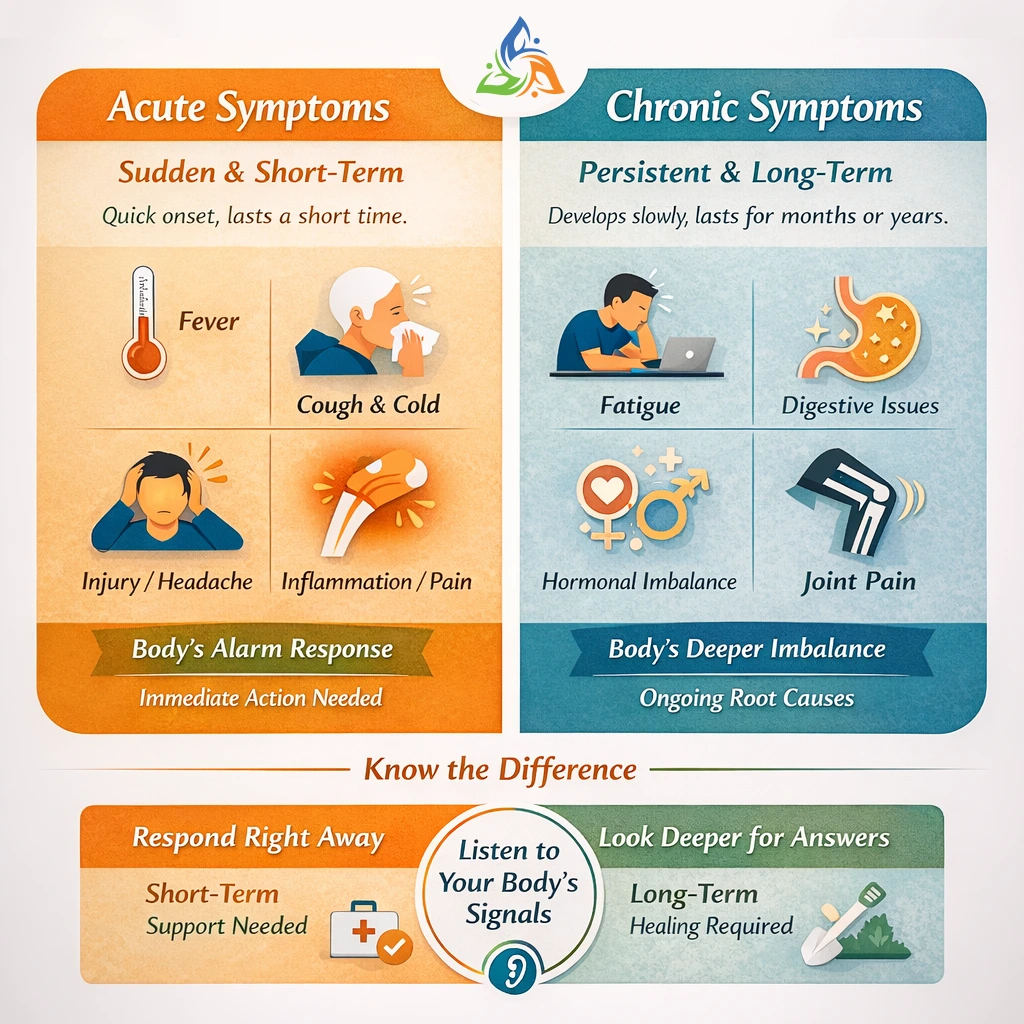
When it comes to health, not all symptoms are created equal. Some appear suddenly and resolve quickly, while others persist over time. Understanding the difference between acute and chronic symptoms can help you respond more effectively—and support your body in the right way.
What Are Acute Symptoms?
Acute symptoms come on quickly and are usually short-lived. They are often the body’s immediate response to a specific trigger such as an infection, injury, or sudden stress.
Examples include:
- Fever
- Cough or cold
- Headache
- Muscle pain
- Inflammation
These symptoms are often a sign that your body is actively fighting or adapting. In many cases, acute symptoms are part of the healing process and resolve once the issue is addressed.
What Are Chronic Symptoms?
- Chronic symptoms develop slowly and persist over weeks, months, or even years. They often indicate deeper, unresolved imbalances within the body.
Examples include:
- Persistent fatigue
- Digestive issues
- Hormonal imbalances
- Joint pain
- Ongoing inflammation
Unlike acute symptoms, chronic conditions are less about immediate response and more about long-term dysfunction or stress within the system.
Why This Distinction Matters
Treating acute and chronic symptoms the same way can lead to frustration.
- Acute symptoms may require short-term support or intervention.
- Chronic symptoms often need a deeper, more holistic approach—addressing lifestyle, nutrition, stress, and internal balance.
Ignoring chronic symptoms or only suppressing them can allow underlying issues to persist or worsen over time.
A Smarter Approach to Healing
Your body is always communicating. Acute symptoms are like alarms, while chronic symptoms are like ongoing signals that something needs attention.
The goal isn’t just to eliminate symptoms—but to understand what they’re pointing to.
By recognizing whether your symptoms are acute or chronic, you can:
- Respond appropriately
- Support your body’s natural processes
- Move toward lasting health, not just temporary relief
Final Thoughts
Acute symptoms demand attention. Chronic symptoms demand understanding.
When you learn to listen to both, you shift from reacting to symptoms… to truly supporting your body’s journey toward balance and long-term wellness.


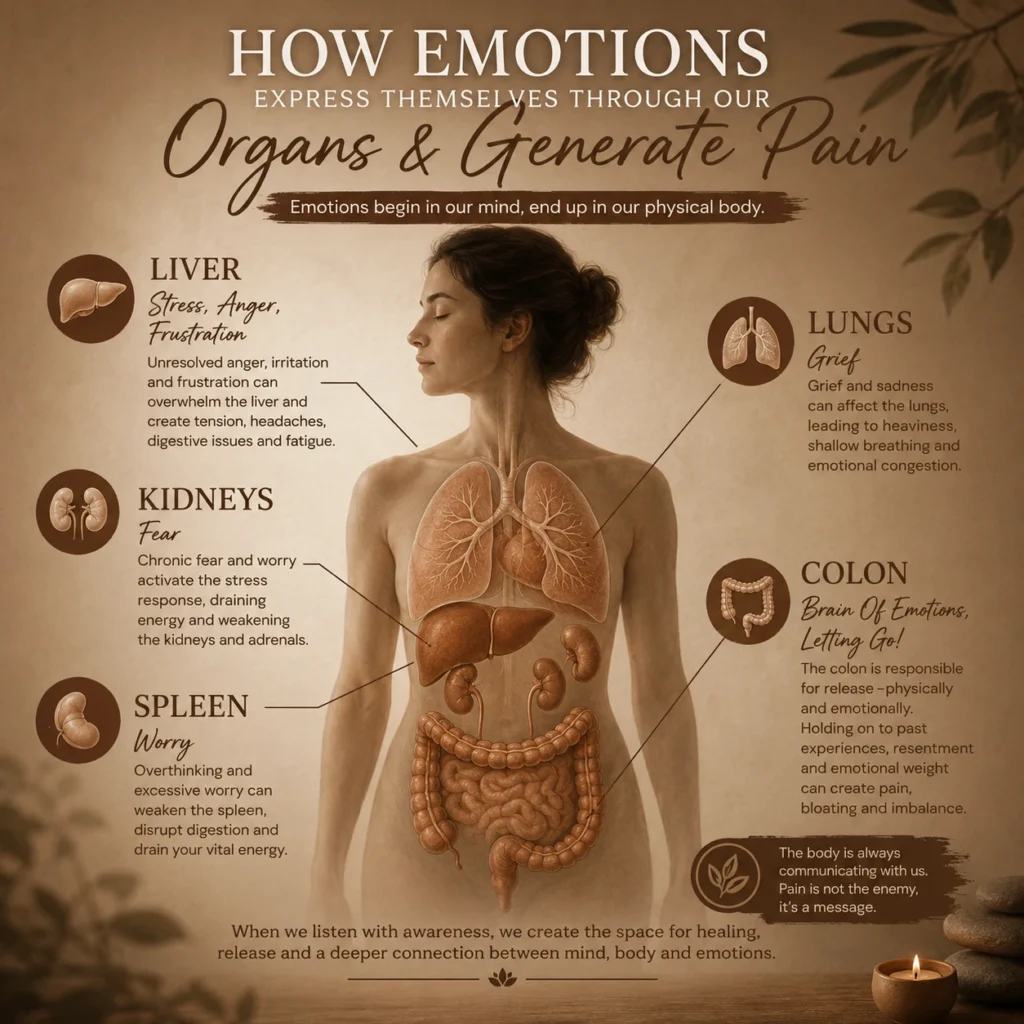
Excellent article highlighting the important difference between acute and chronic symptoms. Understanding that symptoms are the body’s way of communicating—not just problems to suppress—creates a deeper awareness of true healing and long-term wellness.
Comments are closed.