
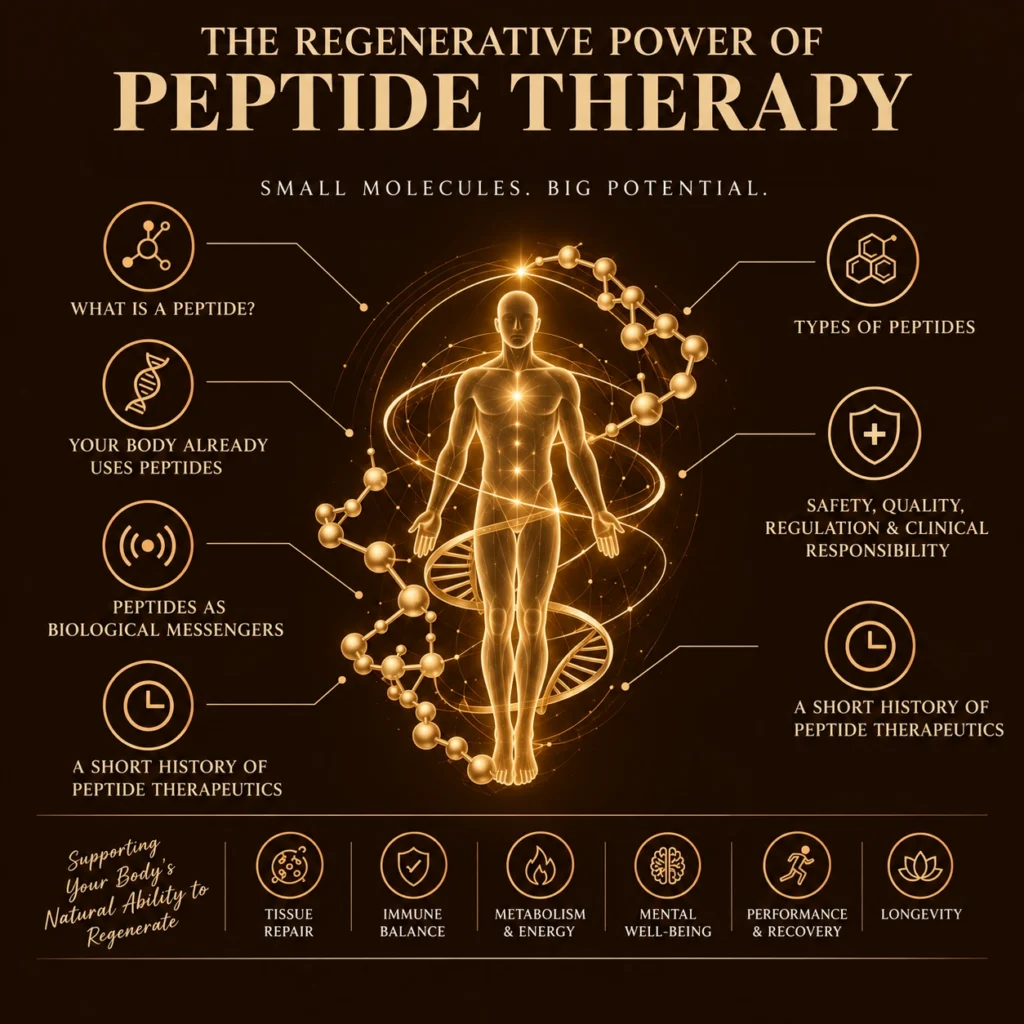
Tiny messengers. Powerful biological signals. New possibilities in modern medicine.
What if some of the body’s most interesting biological signals were made from just a few building blocks?
Peptides are attracting growing interest in health, recovery, and regenerative medicine because they play important roles in how the body communicates, regulates biological processes, and maintains its tissues.
But what exactly are peptides, how do they work, and what should we know before considering peptide-based therapies?
What Is a Peptide?
A peptide is a short chain of amino acids—the same building blocks that form proteins.
While proteins often have larger, more complex structures, peptides can act as highly specific biological signals. Their effects depend on their structure, the receptors they interact with, and the processes they influence.
Your Body Already Uses Peptides
Peptides are not new to the body. They are part of its natural communication system.
For example, insulin is a peptide hormone that helps regulate blood glucose. Other naturally occurring peptides participate in immune responses, appetite regulation, tissue maintenance, and communication between cells.
This is what makes peptides so interesting: they can influence biological processes by interacting with the body’s existing signaling pathways
Peptides as Biological Messengers
Think of a peptide as a message sent to a specific biological destination.
When a peptide binds to a compatible receptor, it can trigger or modify a response in a cell. Depending on the peptide, this may influence hormone release, metabolism, immune activity, or tissue function.
Researchers are exploring how particular peptides might support healing and recovery. However, the effects are highly specific: not every peptide promotes regeneration, and promising laboratory findings do not automatically translate into proven benefits in humans.
A Short History of Peptide Therapeutics
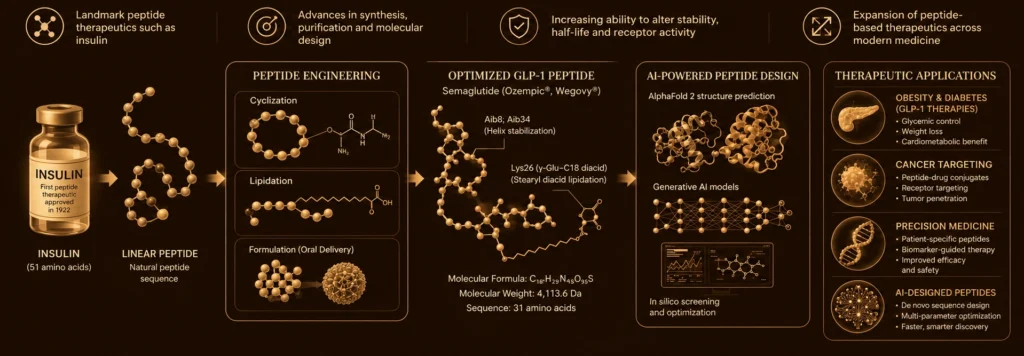
Peptide-based medicine has been part of modern healthcare for more than a century. The discovery and development of insulin in the early 1920s marked a major milestone, transforming the treatment of diabetes. Since then, researchers have developed peptide medicines for a range of conditions, including metabolic disorders and certain gastrointestinal diseases.
Today, advances in peptide design and drug delivery continue to expand research into how these molecules may be used in medicine.
Types of Peptides
Different peptides serve different biological purposes.
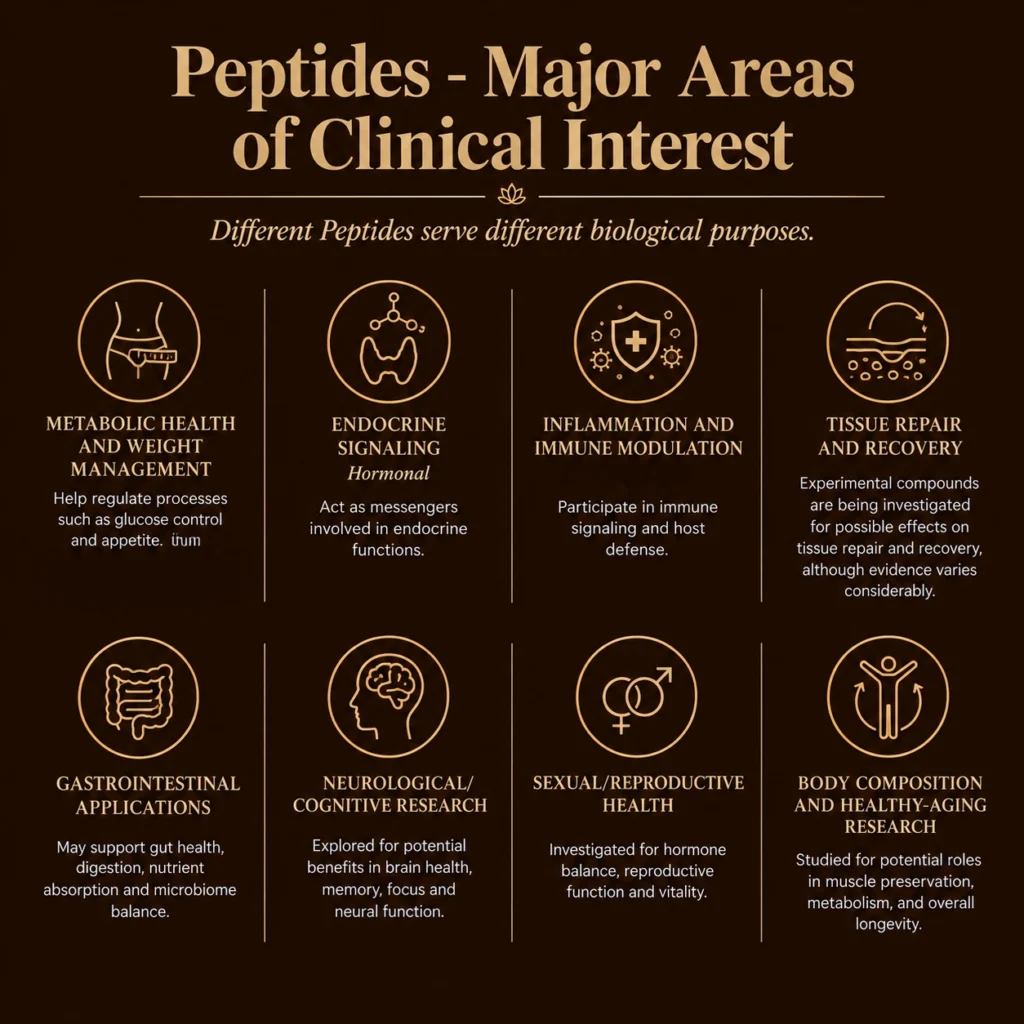
The important distinction is that some peptide therapies are well-established medicines, while others remain experimental, with limited evidence of safety and effectiveness in humans.
Safety, Quality, Regulation and Clinical Responsibility
The potential of peptide science must be balanced with caution.
Not all peptides sold online or marketed for longevity, muscle recovery, or tissue repair are approved medicines. Products may have uncertain purity, potency, sterility, or long-term safety. Regulatory status also varies by product and country.
Before considering a peptide therapy, it is important to establish:
- Whether the product is approved for its intended use.
- What reliable human clinical studies demonstrate.
- What side effects, interactions, and contraindications are known.
- Whether it is prescribed and monitored by an appropriately qualified healthcare professional.
For example, the US FDA has warned that certain unapproved products marketed as regenerative therapies may pose serious risks.
Promising science is not the same as proven treatment. Experimental peptides should not be assumed safe or effective simply because they occur naturally in the body or show encouraging results in laboratory studies.
Closing Thoughts: The Future of Regenerative Medicine
Peptides offer an exciting window into the body’s complex communication systems. By studying how these molecules interact with cells and biological pathways, researchers are uncovering new possibilities for targeted therapies.
But the real promise lies not in treating peptides as miracle solutions—it lies in understanding their specific actions, identifying where evidence supports their use, and applying them responsibly.
The future of peptide therapy depends on three things: sound science, responsible clinical practice, and evidence-led innovation.
This article is for educational purposes only and is not a substitute for medical advice or a recommendation to use peptide products.